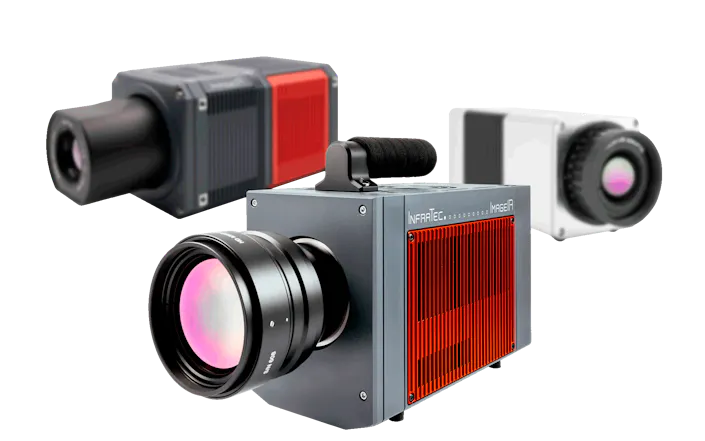
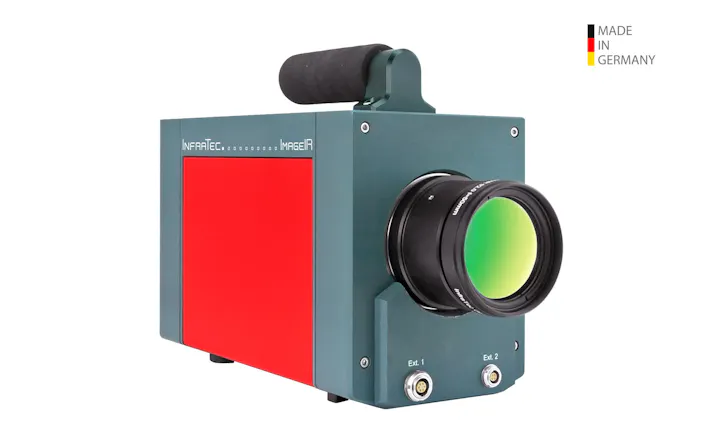
ImageIR® 9300
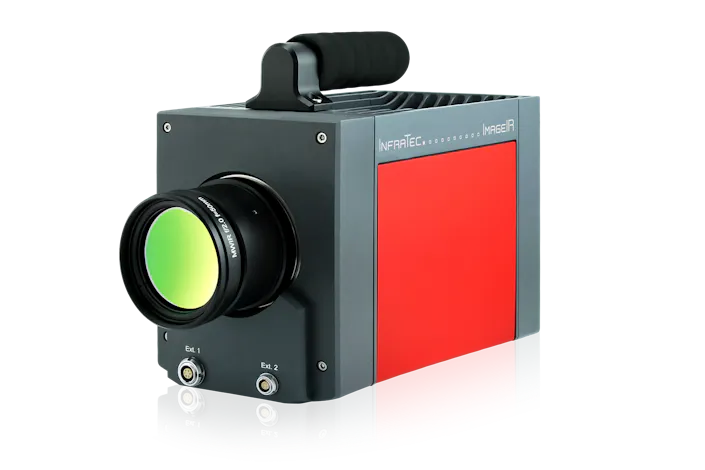
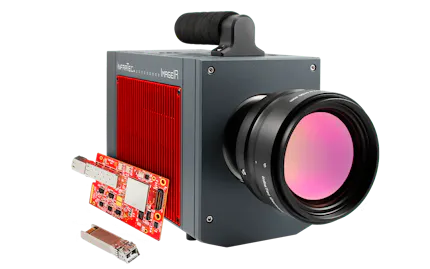
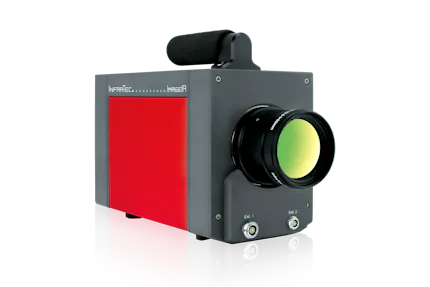
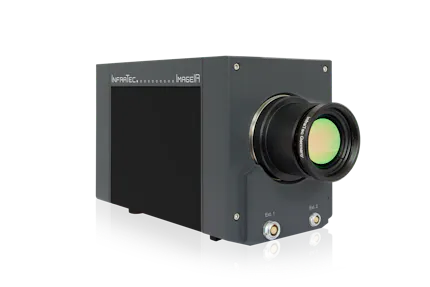
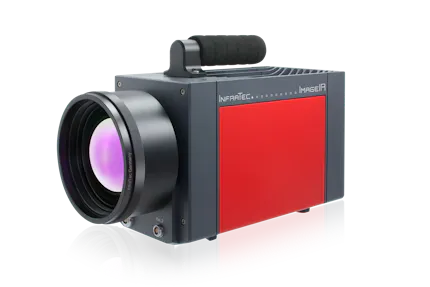
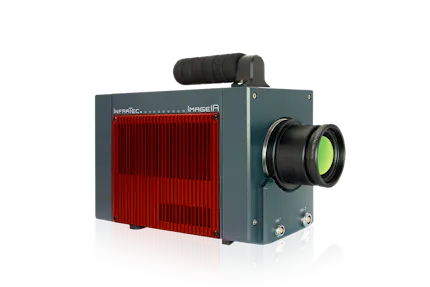
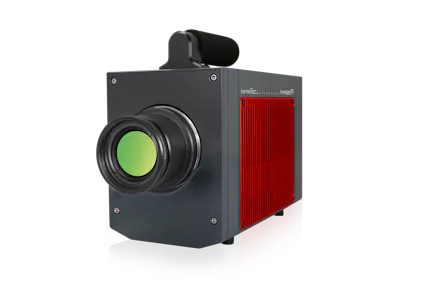
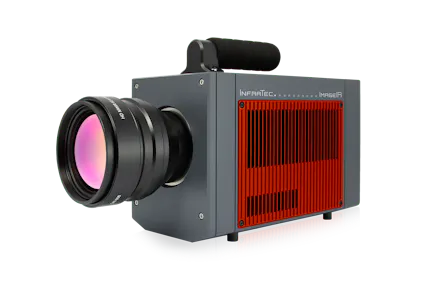
The high-end infrared camera ImageIR® 9300 from InfraTec is a further top of the range model of the high-end series ImageIR®.
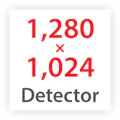
Large detector format of (1,280 × 1,024) IR pixels
Extremely short integration times in the microsecond range
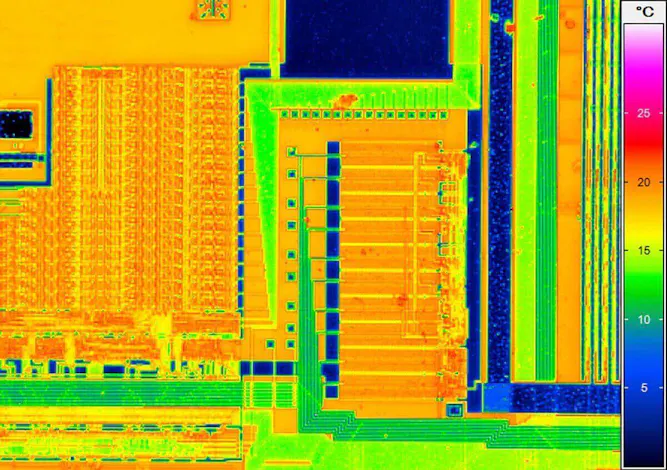
Analysis of extremely small structures in the μm range
Thermal resolution up to 25 mK









Customers Trust InfraTec





Efficient measurement of smallest structures on large-scale objects
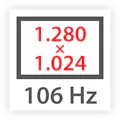
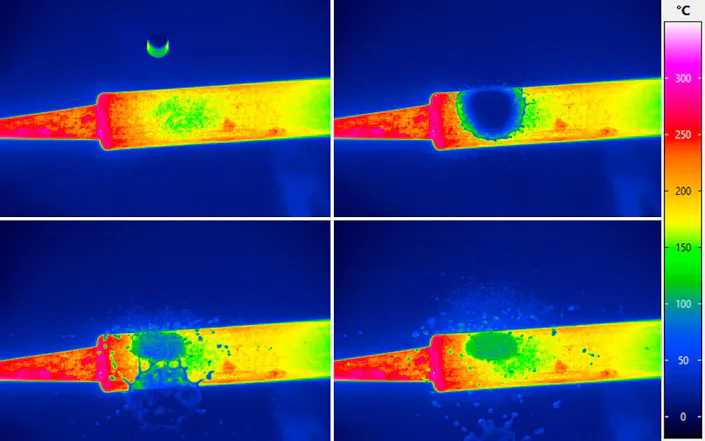
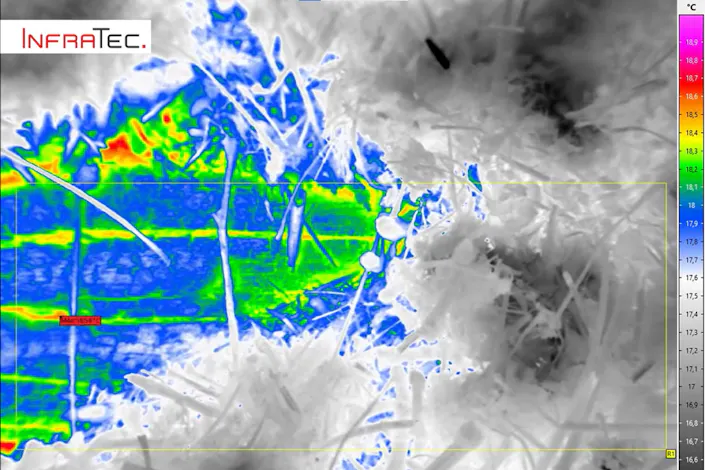
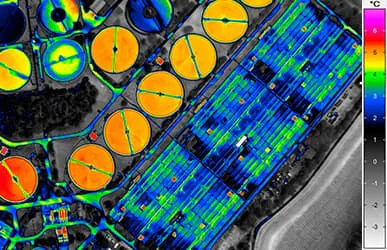
Analysis of extreme temperature changes and gradients in full frame
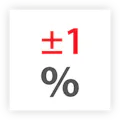
Highly accurate and repeatable measurements
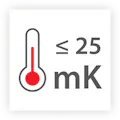
Precise detection of smallest temperature differences

High-speed, long-distance interference proof data transmission

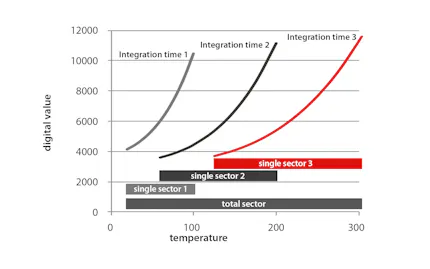
Flexible setting of temperature measurement ranges/integration times beyond calibration ranges

Precise, fast and remotely controllable; including multiple autofocus functions
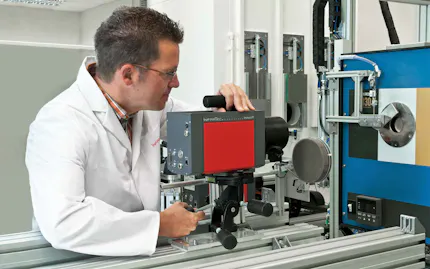
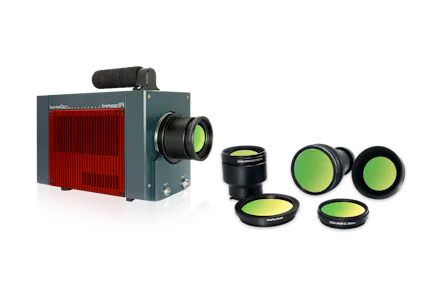
ImageIR® 9300 was developed for demanding operations in research and development, non-destructive material testing and process monitoring sectors. Its modular structure, which consists of optical-, detector- and interface-modules, makes it easily adaptable to the respective application.
Integrated Trigger and Process Interfaces
The camera series ImageIR® is equipped with a snapshot detector as well as with an internal trigger interface, which guarantees a repeatable high-precision triggering. Two respective in- and outputs are used to operate the camera or to generate digital control signals for external devices. Two digital channels of the data stream can be recorded synchronously with those trigger inputs. Additional digital and analogue in- and outputs are available in connection with the process interface IRBIS® 3 process. Furthermore, extra information will be saved directly with the images.
Easily Transfer Your Radiometric Data to the Computer
You will be able to work with both radiation proportional data formats and also directly with temperature data in °C or °F. You will receive the data by setting your specific parameters in the easy handling acquisition interface of the ImageIR® 9300 series.
Avoid measurement errors using highest geometrical resolution of (1,280 × 1,024) infrared pixels
It is equipped with a cooled focal-plane-array photon detector with a format of (1,280 × 1,024) IR pixels. In combination with the outstanding thermal resolution of 0.025 K (25 mK), very high frame rates of 106 Hz and extremely short integration times of only a few microseconds, this camera offers you a whole new range of applications.
Detect Smallest Temperature Differences Using High Thermal Resolution of 25 mK
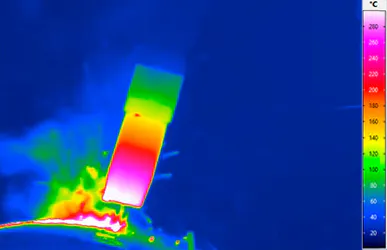
The thermal resolution of the ImageIR® infrared camera series allows you to measure smallest temperature differences of 25 mK (at 30 °C). Thermal images with a narrow temperature span display details absolutely sharp. You will find interesting signatures even there where other infrared camera systems cannot detect any temperature differences any longer.
Take Advantage of the Modular Concept for Your Flexibility
The closed, industrial-suited, high-strength aluminium alloy housing is very compact and protects the sensitive sensors and electronics even during roughest applications. It impresses with its low weight. The modular design allows for an application-specific configuration and later adaptation to varying demands. The interfaces are equipped with push-on connectors to uphold the degree of protection.
Technical Specifications
| Spectral range | (1.5 … 5.5) µm |
| Pitch | 15 µm |
| Detector | InSb |
| Detector format (IR pixels) | (1,280 × 1,024) |
| Image recording principle | Snapshot |
| Readout mode | ITR / IWR |
| Aperture ratio | f/2.0 or f/4.6 |
| Detector cooling | Stirling cooler |
| Temperature measuring range | (-40 … 1,500) °C, up to 2,000 °C* |
| Measurement accuracy | ± 1 °C or ± 1 % |
| Temperature resolution at 30 °C | 0.025 K |
| Frame rate (full / half / quarter / sub frame) | Up to 106 / 200 / 390 / 3,200 Hz |
| Window mode | Yes |
* Depending on model
** In selected measurement ranges
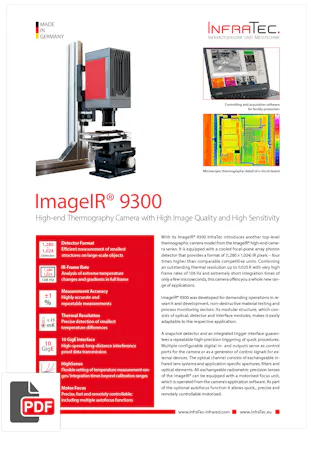
Data Sheet
Get all the information you need at a glance in our data sheets.








Solid Immersion Lens (SIL) for ImageIR®
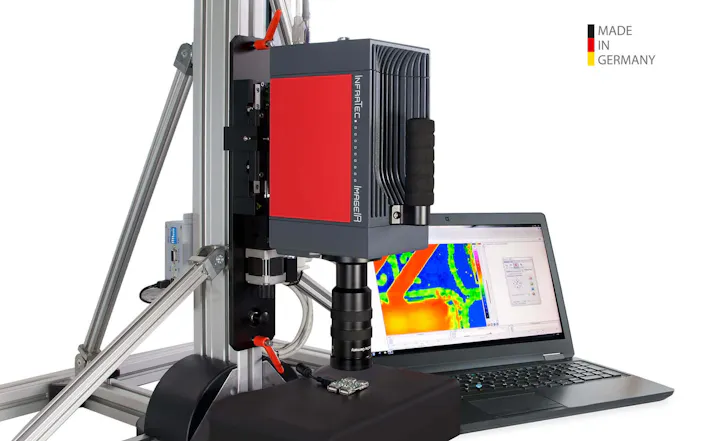
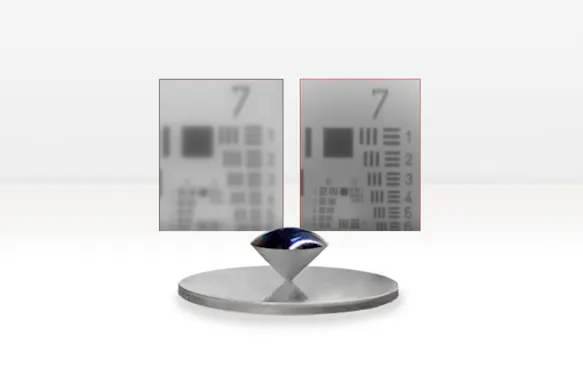
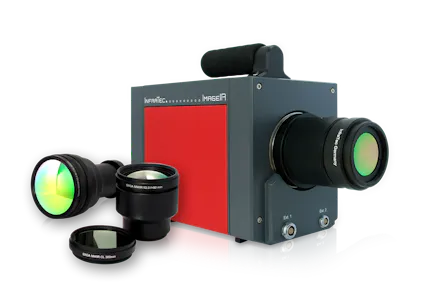
In order to make particularly small structures clearly visible, an infrared camera with a large detector format is suitable. In some cases, special measurement and testing tasks require a further increase in spatial resolution. In the field of micro-thermography, high-performance infrared microscopic lenses are used for this purpose. Their benefits can be further increased in conjunction with Solid Immersion Lenses (SIL). Mounted on the optics, these immersion media significantly improve the resolution of even the smallest structures in the µm range.
Comprehensive Thermography Evaluation Software for Efficient Operation
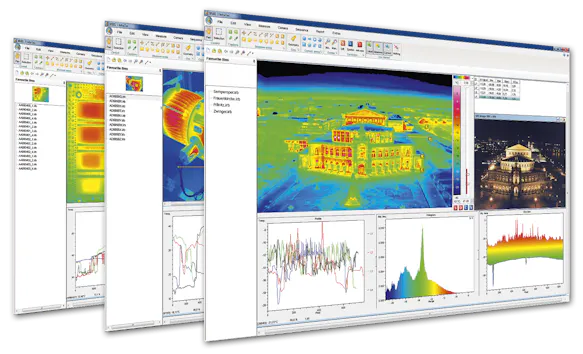
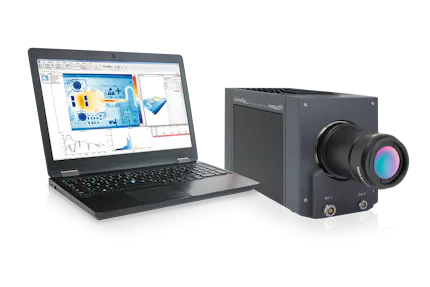
The software family IRBIS® 3, which was developed by InfraTec, is part of a complete system of the camera series ImageIR®. The comfortable and professional thermography software IRBIS® 3 professional offers a wide range of analysis- and editing tools to analyse sophisticated thermal investigations. The combination of ImageIR® together with the professional thermographic software meets all requirements that are set as standard for efficient high-performance tools for thermographic investigations.


Configure Your Camera System
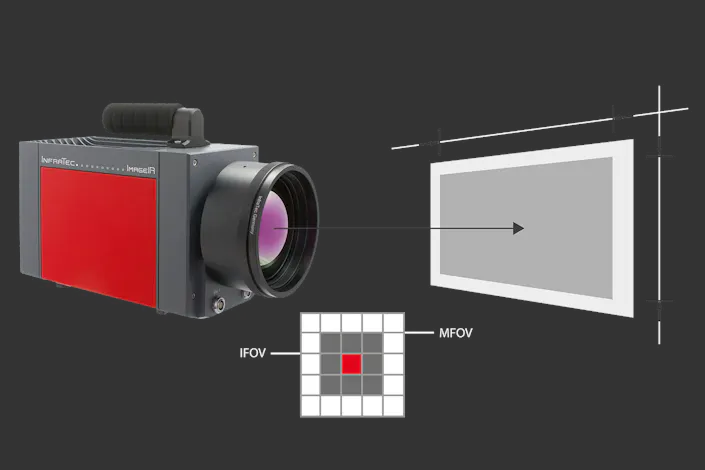
Each measurement or testing task has its own characteristic basic conditions. For getting optimal results camera, detector and lens have to be perfectly matched to one another. The field of view calculator helps you to determine the appropriate combination.






Would You Like to Know More?
It is not unusual for tasks to be associated with special requirements. Discuss your specific application needs with our specialists, receive further technical information or learn more about our additional services.




















Choose Your Infrared Camera
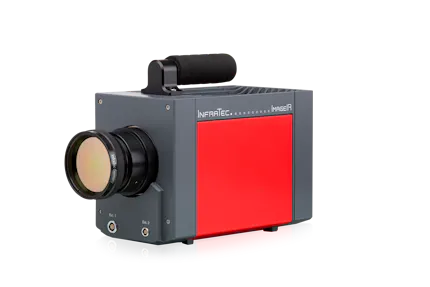
Choose from more than 30 infrared camera models. Our product range includes cameras of different product lines: Pro-Line, Compact-Line, Zoom-Line and OEM-Line.